Background: Mother-to-child transmission (MTCT) of HIV remains the primary source of HIV infection among children under 15 years. Despite efforts to prevent MTCT, it remains a major public health problem in Ethiopia. This study assessed the utilization of Prevention of Mother-to-Child Transmission (PMTCT) of HIV services and nutritional interventions among pregnant women in Hadiya Zone, Southern Nations, Nationalities, and Peoples’ Region (SNNPR), Ethiopia. Methods: A community-based cross-sectional study was conducted among pregnant women in Hadiya Zone, SNNPR, Ethiopia, from March 1 to May 2, 2019. Participants were selected using systematic sampling. Data were collected using a pretested, structured, interviewer-administered questionnaire. Multivariable logistic regression identified predictors of PMTCT service utilization. Statistical significance was set at p < 0.05, with adjusted odds ratios (AORs) and 95% confidence intervals (CIs). Results: Among 613 participants, the response rate was 97.3%. PMTCT service utilization was 45% (95% CI: 41.1–48.8). Women with primary education or higher were five times more likely to utilize PMTCT services than those without formal education (AOR = 5.00; 95% CI: 3.08–8.16). Women attending two or more antenatal care (ANC) visits (AOR = 4.25; 95% CI: 2.41–7.51), living closer to a health facility (AOR = 1.93; 95% CI: 1.24–3.01), and having male partner involvement (AOR = 1.88; 95% CI: 1.31–2.69) were also more likely to utilize PMTCT services. Conclusion: PMTCT service utilization among pregnant women remains low. Higher education, two or more ANC visits, living within 60 minutes of a health facility, and male partner involvement were associated with greater utilization. Stakeholders should prioritize expanding PMTCT service coverage and addressing these factors to improve utilization among pregnant women.
This is an Open Access article, distributed under the terms of the Creative Commons Attribution 4.0 International License (http://creativecommons.org/licenses/by/4.0/), which permits unrestricted use, distribution and reproduction in any medium or format, provided the original work is properly cited.
Transmission of human immunodeficiency virus (HIV) from an infected mother to her child during pregnancy, labor, delivery, or breastfeeding is known as mother-to-child transmission (MTCT). MTCT remains a major public health problem and the primary source of HIV infection among children under 15 years. Prevention of mother-to-child transmission (PMTCT) services begin before conception and continue throughout pregnancy, labor, delivery, and breastfeeding. These services aim to prevent HIV infection among women of reproductive age (15–49 years), unintended pregnancies among women living with HIV, and transmission to their children through antiretroviral therapy (ART). Thus, PMTCT is essential to ensuring that no child is born with HIV
[1]
World Health Organization. Prevention of Mother-to-Child Transmission (PMTCT): Briefing Note. World Health Organization, Geneva, Switzerland. 2007.
[2]
World Health Organization. Prevention of Mother-to-Child Transmission (PMTCT) of HIV: Guidelines. World Health Organization, Geneva, Switzerland. 2017.
[1, 2]
.
Globally, approximately 1.8 million children under 15 years were living with HIV, and about 120,000 died from AIDS-related illnesses in 2018. Nearly 90% of these infections resulted from MTCT
[3]
U.S. President’s Emergency Plan for AIDS Relief (PEPFAR) and/or World Health Organization. The Global HIV/AIDS Epidemic in 2018. Global Health Policy. 2021.
[3]
. According to the United Nations Children’s Fund (UNICEF), approximately 1.4 million pregnant women worldwide were living with HIV in 2017, and 180,000 children were newly infected that year. Africa accounted for nearly 75% of the global burden, while sub-Saharan Africa and low- and middle-income countries together contributed approximately 91%
[2]
World Health Organization. Prevention of Mother-to-Child Transmission (PMTCT) of HIV: Guidelines. World Health Organization, Geneva, Switzerland. 2017.
[2]
.
In Ethiopia, an estimated 66,517 children were living with HIV in 2017, with MTCT being the primary source of infection
[4]
U.S. President’s Emergency Plan for AIDS Relief (PEPFAR). Ethiopia Country/Regional Operational Plan (COP/ROP): Strategic Direction Summary. Washington, DC, USA. 2017.
[4]
. Without PMTCT services, the risk of HIV transmission during pregnancy, labor, and delivery ranges from 15% to 45% and may reach 50% with breastfeeding. Effective PMTCT interventions can reduce this risk to below 5%
[2]
World Health Organization. Prevention of Mother-to-Child Transmission (PMTCT) of HIV: Guidelines. World Health Organization, Geneva, Switzerland. 2017.
[2]
. Ethiopia has expanded PMTCT services by adopting World Health Organization (WHO) recommendations and implementing Option B+, a test-and-treat strategy for all HIV-positive pregnant and breastfeeding women
[2]
World Health Organization. Prevention of Mother-to-Child Transmission (PMTCT) of HIV: Guidelines. World Health Organization, Geneva, Switzerland. 2017.
[2]
. PMTCT is a national priority program of the Federal Ministry of Health, and the number of facilities providing these services has increased.
Despite these efforts, PMTCT service coverage remains inadequate. HIV testing among pregnant women and ART provision to HIV-positive pregnant women remain low, largely because of missed opportunities and limited service utilization. According to the 2016 Ethiopian Demographic and Health Survey (EDHS), 62% of pregnant women attended at least one antenatal care (ANC) visit, but only 19% received HIV counseling, testing, and results through PMTCT services
[5]
Central Statistical Agency (CSA) [Ethiopia], ICF. Ethiopia Demographic and Health Survey 2016. Central Statistical Agency and ICF, Addis Ababa, Ethiopia, and Rockville, Maryland, USA. 2016.
[5]
. In the Southern Nations, Nationalities, and Peoples’ Region (SNNPR), only 17.2% of women received HIV counseling, testing, and results in 2016, below the national average
[4]
U.S. President’s Emergency Plan for AIDS Relief (PEPFAR). Ethiopia Country/Regional Operational Plan (COP/ROP): Strategic Direction Summary. Washington, DC, USA. 2017.
[4]
. Hadiya Zone is one of the most populous zones in SNNPR, yet information on barriers to PMTCT service utilization remains limited. Therefore, this study assessed PMTCT service utilization and associated factors among pregnant women in Hadiya Zone. The findings aim to identify factors contributing to low utilization and inform efforts to strengthen maternal health services and HIV prevention and control strategies.
2. Methods and Materials
Study Area, Design, and Period: A community-based cross-sectional study was conducted from March 1 to May 2, 2019, in Hadiya Zone, Southern Nations, Nationalities, and Peoples’ Region (SNNPR), Ethiopia, approximately 230 km south of Addis Ababa. According to the 2014 Ethiopian Demographic and Health Survey (EDHS), the zone had an estimated population of 1.69 million, including 30,048 pregnant women. The zone has one referral hospital, four primary district hospitals, 61 public health centers, 305 health posts, and several private clinics. All hospitals and 47 public health centers provide Prevention of Mother-to-Child Transmission (PMTCT) services, whereas health posts and private clinics do not.
Population, Sample Size, and Sampling Methods: The study population comprised pregnant women who had lived in the study area for at least six months. The sample size was calculated using the PMTCT service utilization prevalence of 53.7% reported in Bench Maji Zone
[6]
Shewasinad, S., Negash, S. Assessment of Factors Affecting PMTCT Service Utilization among Pregnant Women Attending Antenatal Care at Public Health Facilities in Mizan-Aman Town, Bench Maji Zone. EC Paediatrics. 2018.
[6]
. A design effect was applied to account for cluster variability, along with a 5% significance level and a 10% nonresponse rate, yielding a final sample size of 630 pregnant women. A multistage sampling technique was used. The sample was proportionally allocated to each cluster (kebele) according to population size, and participants were selected through systematic random sampling. Written informed consent was obtained before data collection.
Data Collection Tools, Procedures, and Quality Control: Data were collected using a pretested, structured, interviewer-administered questionnaire adapted from the UNAIDS Best Practice Collection Tool and modified for the local context
[7]
Joint United Nations Programme on HIV/AIDS (UNAIDS). Getting to Zero: 2011–2015 Strategy. UNAIDS, Geneva, Switzerland. 2011.
[7]
. The questionnaire was prepared in English, translated into Amharic and Hadiyisa, and back-translated into English to ensure consistency. Three supervisors and 12 data collectors received three days of training on data collection procedures and questionnaire clarification before data collection began.
Data Management and Analysis: Questionnaires were checked for completeness, cleaned, coded, and entered into EpiData Manager version 4.4.0 before being exported to SPSS for Windows version 20 for analysis. Composite variables were computed and dichotomized according to established criteria.
Principal component analysis (PCA) was used to construct the household wealth index from socioeconomic variables. Bartlett’s test of sphericity was significant (p < 0.05), indicating suitability for factor analysis, while the Kaiser–Meyer–Olkin (KMO) measure confirmed adequate sampling (KMO > 0.5). Varimax rotation was applied to minimize cross-loadings, and the wealth index was generated as a continuous variable from the extracted components.
Descriptive statistics, including frequencies, proportions, and summary measures, were used to characterize the study population and presented in tables and narrative descriptions. Multicollinearity was assessed, and model goodness-of-fit was evaluated using the Hosmer–Lemeshow test.
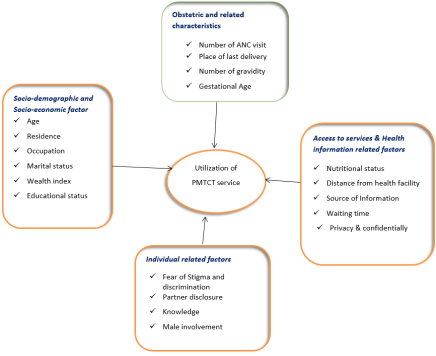
Bivariable logistic regression identified candidate variables for multivariable analysis. Variables with p < 0.25 were entered into the multivariable logistic regression model to control for potential confounding. Variables with p < 0.05 were considered statistically significant. Adjusted odds ratios (AORs) and 95% confidence intervals (CIs) were reported to assess the strength of associations (Figure 1).
Source: Adapted from review of literature (29, 32, & 33).
Figure 1. Conceptual frame work for PMTCT of HIV service utilization and associated factor among pregnant women.
3. Result
Referral linkage, male partner involvement, fear stigma& discrimination related to HIV
Out of the total respondents in this study, 401 (65.4%) pregnant women reported having follow-up antenatal care (ANC) at a health post. Among these 401 women, 210 (52.4%) were referred to a health center or hospital for PMTCT (Prevention of Mother-To-Child Transmission) of HIV/AIDS services. Regarding male partner involvement, 365 (59.5%) partners were actively involved in the current pregnancy. Concerning fear of stigma and discrimination related to HIV, 332 (54.2%) of the participants reported fear of HIV testing and disclosure of results to their partner or family. Overall, 47.6% of respondents had disclosed their HIV test results to their partner (Table 1).
Table 1. Socio-demographic characteristics of pregnant women in Hadiya zone, southern Ethiopia 2019 (n=613).
Factors associated with Utilization of PMTCT of HIV Service among Pregnant Women
In the bivariate analysis, several variables were identified as potential candidates for inclusion in the multivariable logistic regression model. These included: residence of respondents, educational status of women, marital status of women, gestational age, number of ANC visits, distance from the health facility, male partner involvement, and privacy during ANC visits. After adjusting for potential confounders in the multivariable logistic regression model, four variables remained statistically significant predictors of PMTCT service utilization: Educational status of women, Number of ANC visits, Distance from the health facility and Male partner involvement (Figure 2).
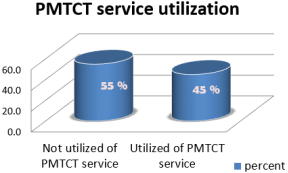
Figure 2. Level of PMTCT service utilization among pregnant women in Hadiya Zone, May 2019.
Independent predictors of PMTCT service utilization among pregnant women in Hadiya Zone southern Ethiopia
In this study, the utilization of PMTCT services was 45% (95% CI: 41.1–48.8). This finding is below the national PMTCT guideline, which recommends that every pregnant woman attending ANC should receive PMTCT services
[4]
U.S. President’s Emergency Plan for AIDS Relief (PEPFAR). Ethiopia Country/Regional Operational Plan (COP/ROP): Strategic Direction Summary. Washington, DC, USA. 2017.
[4]
. The utilization observed in this study was lower than that reported in Sebeta (86.9%)
[8]
Merga, H., Woldemichael, K., Dube, L. Utilization of Prevention of Mother-to-Child Transmission of HIV Services and Associated Factors among Antenatal Care-Attending Mothers in Sebeta Town, Central Ethiopia. Advances in Public Health. 2016.
[8]
, Adama (70.1%)
[9]
Gebremedhin, K. B., Tian, B., Tang, C., Zhang, X., Yisma, E., Wang, H. Factors Associated with Acceptance of Provider-Initiated HIV Testing and Counseling among Pregnant Women in Ethiopia. Patient Preference and Adherence. 2018. Volume (22).
[9]
, Bahir Dar (61.3%)
[10]
Feleke, B. E., Wasie, B. Challenges of PMTCT Service Utilization in Amhara Region: A Comparative Cross-Sectional Study. Ethiopian Journal of Health Sciences. 2018. Volume, issue, page range, and DOI require verification. World Health Organization. Report on Primary health care implementation in the Eastern Mediterranean Region. USA Washington DC. 2019.
[10]
, and Mizan Aman (53.7%), Ethiopia
[6]
Shewasinad, S., Negash, S. Assessment of Factors Affecting PMTCT Service Utilization among Pregnant Women Attending Antenatal Care at Public Health Facilities in Mizan-Aman Town, Bench Maji Zone. EC Paediatrics. 2018.
[6]
. This discrepancy may be due to methodological differences: this study employed a community-based approach with systematic sampling, whereas the other studies focused on ANC attendees at health facilities and used convenience sampling. Furthermore, PMTCT utilization in this study was lower than studies conducted in South Africa (78%)
[11]
World Health Organization. Report on Primary Health Care Implementation in the Eastern Mediterranean Region. World Health Organization. 2019. Publication details and publisher location require verification.
[11]
and Uganda (85.5%)
[12]
Mustapha, M., Musiime, V., Kitaka, S. B., Rujumba, J., Barungi, N. N. Utilization of Prevention of Mother-to-Child Transmission of HIV Services by Adolescent and Young Mothers in Mulago Hospital, Uganda. BMC Infectious Diseases. 2018.
[12]
, which may reflect socio-economic and demographic differences. However, the utilization observed here was higher than that reported in South Gondar, Ethiopia
[13]
Mekibib, T. K., Askal, T. K., Eleni, T. T., Kaleab, T. T., Fikadu, Y. A. Service Utilization of Prevention of Mother-to-Child HIV Transmission and Associated Factors among Antenatal Care Clients in Dera Woreda Health Institutions, South Gondar, Ethiopia. International Journal of Caring Sciences. 2018. 17(2).
[13]
, and in the 2016 EDHS report
[5]
Central Statistical Agency (CSA) [Ethiopia], ICF. Ethiopia Demographic and Health Survey 2016. Central Statistical Agency and ICF, Addis Ababa, Ethiopia, and Rockville, Maryland, USA. 2016.
[5]
, likely due to differences in study setting, as the South Gondar study included only rural areas and the EDHS data represented the national population, including rural, urban, and remote areas (Table 2).
Table 2. Independent predictors of PMTCT service utilization among pregnant women in Hadiya Zone southern Ethiopia 2019 (n=613).
Variables
Characteristics
Frequency (No)
Percentage (%)
Age of respondents
15-24
208
33.9
25-34
268
43.7
=>35
137
22.4
Residence of mother
Rural
458
74.7
Urban
155
25.3
Religion
Protestant
459
74.9
Orthodox
123
20.1
Others*
31
5
Ethnicity
Hadiya
514
83.8
Gurage
67
10.9
Others**
32
5.3
Educational status
No formal education
181
29.5
Primary education (1-8)
277
45.2
Secondary & above (9-12)+
155
25.3
Mothers occupation
House wife
537
87.6
Merchant
21
3.4
Government employee
37
6.0
Others***
18
2.9
Marital status
currently in marital union
504
82.2
currently not in marital union
109
17.8
Husband occupation
Farmer
497
81
Government employee
85
13.9
Others***
31
5.1
Household wealth index
Lowest
122
19.9
Second
123
20.1
Middle
125
20.4
Fourth
121
19.7
Highest
122
19.9
4. Discussion
Educational status was significantly associated with PMTCT service utilization. Women with primary education or higher were more likely to use PMTCT services than those without formal education. This finding aligns with studies in the Afar region
[14]
Akal, C. G., Afework, D. T. Status of Prevention of Mother-to-Child Transmission (PMTCT) Services Utilization and Factors Affecting PMTCT Service Uptake by Pregnant Women Attending Antenatal Care Clinics in Selected Health Facilities of Afar Regional State, Ethiopia. Journal of Environmental and Public Health. 2018. 18(2).
[14]
, Wollega Zone
[15]
Feyera, A., Megerssa, B., Legesse, D., Hailemichael, F. Prevention of Mother-to-Child Transmission of HIV/AIDS: Service Utilization and Associated Factors among Selected Public Health Facilities in Ethiopia. Medical Practice and Review. 2017. 19(1).
[15]
, Bahir Dar
[10]
Feleke, B. E., Wasie, B. Challenges of PMTCT Service Utilization in Amhara Region: A Comparative Cross-Sectional Study. Ethiopian Journal of Health Sciences. 2018. Volume, issue, page range, and DOI require verification. World Health Organization. Report on Primary health care implementation in the Eastern Mediterranean Region. USA Washington DC. 2019.
[10]
, Ethiopia, and Kenya
[16]
Otieno, A. J. W., Karanja, S. M., Kagira, J. Socio-Cultural Factors Influencing Utilization of Prevention of Mother-to-Child Transmission of HIV among Women Attending Antenatal Care Clinics in Rachuonyo North Sub-County, Homa Bay County, Kenya. Information and Knowledge Management. 2018. 18(3).
[16]
. Higher educational attainment may improve women’s knowledge, understanding, and health-seeking behaviors.
Antenatal care (ANC) visits were another independent predictor. Women attending two or more ANC visits were more likely to utilize PMTCT services, consistent with studies in South Gondar
[13]
Mekibib, T. K., Askal, T. K., Eleni, T. T., Kaleab, T. T., Fikadu, Y. A. Service Utilization of Prevention of Mother-to-Child HIV Transmission and Associated Factors among Antenatal Care Clients in Dera Woreda Health Institutions, South Gondar, Ethiopia. International Journal of Caring Sciences. 2018. 17(2).
[13]
, Adama
[9]
Gebremedhin, K. B., Tian, B., Tang, C., Zhang, X., Yisma, E., Wang, H. Factors Associated with Acceptance of Provider-Initiated HIV Testing and Counseling among Pregnant Women in Ethiopia. Patient Preference and Adherence. 2018. Volume (22).
[9]
, and Hawassa
[17]
Abajobir, A. A., Zeleke, A. B. Knowledge, Attitude, Practice, and Factors Associated with Prevention of Mother-to-Child Transmission of HIV/AIDS among Pregnant Mothers Attending the Antenatal Clinic at Hawassa Referral Hospital, South Ethiopia. Journal of AIDS & Clinical Research. 2013. Volume 24(2).
[17]
, Ethiopia. Frequent ANC visits may increase awareness and provide comprehensive HIV education, supporting informed decisions about PMTCT and childcare.
Health facility accessibility, particularly proximity and travel time, was also an important predictor. Women living closer to health facilities were more likely to utilize PMTCT services, consistent with studies in the Afar region
[4]
U.S. President’s Emergency Plan for AIDS Relief (PEPFAR). Ethiopia Country/Regional Operational Plan (COP/ROP): Strategic Direction Summary. Washington, DC, USA. 2017.
[4]
and urban high-HIV-prevalence and rural low-HIV-prevalence settings in Ethiopia
[18]
Zegeye, E. A., Mbonigaba, J., Dimbuene, Z. T. Factors Associated with the Utilization of Antenatal Care and Prevention of Mother-to-Child HIV Transmission Services in Ethiopia: Applying a Count Regression Model. BMC Women's Health. 2018. Volume, article number, and DOI require verification.
[18]
. Poor accessibility may delay seeking, reaching, and receiving care.
Male partner involvement significantly influenced PMTCT utilization. Women whose partners participated in ANC follow-up were more likely to use PMTCT services. This finding is supported by studies in Wollega Zone
[15]
Feyera, A., Megerssa, B., Legesse, D., Hailemichael, F. Prevention of Mother-to-Child Transmission of HIV/AIDS: Service Utilization and Associated Factors among Selected Public Health Facilities in Ethiopia. Medical Practice and Review. 2017. 19(1).
[15]
, Bahir Dar
[10]
Feleke, B. E., Wasie, B. Challenges of PMTCT Service Utilization in Amhara Region: A Comparative Cross-Sectional Study. Ethiopian Journal of Health Sciences. 2018. Volume, issue, page range, and DOI require verification. World Health Organization. Report on Primary health care implementation in the Eastern Mediterranean Region. USA Washington DC. 2019.
[10]
, Sebeta
[8]
Merga, H., Woldemichael, K., Dube, L. Utilization of Prevention of Mother-to-Child Transmission of HIV Services and Associated Factors among Antenatal Care-Attending Mothers in Sebeta Town, Central Ethiopia. Advances in Public Health. 2016.
[8]
, Ethiopia, and Cameroon
[19]
Awungafac, G., Njuken, P. A., Ndas, J. A., Mbuagba, L. T. Prevention of Mother-to-Child Transmission of the Human Immunodeficiency Virus: Investigating the Uptake and Utilization of Maternal and Child Health Services in Tiko Health District, Cameroon. Pan African Medical Journal. 2015. Volume 12.
[19]
. Male involvement may facilitate joint decision-making regarding maternal and child health.
PMTCT services benefit women’s health and prevent HIV transmission to their children. Improving utilization therefore supports HIV prevention strategies and Sustainable Development Goal 3, which promotes health and well-being for all, including people living with HIV.
Limitations: The study did not assess certain healthcare-related factors. Further randomized controlled trials are recommended to identify predictors of PMTCT service utilization.
Conclusion and recommendations: PMTCT service utilization remains low. Educational status, health facility accessibility, ANC visits, and male partner involvement were significant predictors. The Ministry of Health, in collaboration with regional and zonal health offices, should improve access to health facilities. HIV testing and counseling should target all women of reproductive age to prevent missed opportunities. Strengthening health extension workers, women’s development networks, and community structures could promote early ANC attendance, increase awareness of PMTCT services, and encourage male partner involvement. The Ministry of Education should also prioritize universal education to reduce illiteracy in Ethiopia.
Ethics approval and consent to participate: The study was conducted following ethical review and approval by the Institutional Ethical Review Board (IRB) of Jimma University, College of Public Health and Medical Sciences, Postgraduate Coordinating Office (Ref. No. CPHMSPG/68/2018). Permission letters were also obtained from the Hadiya Zone Health Office and from each respective Woreda Health Office and Kebele. The study adhered to the principles of the Declaration of Helsinki. All fundamental ethical principles—including obtaining written informed consent from respondents, ensuring their safety, minimizing risks, maximizing benefits, and maintaining participant comfort—were strictly observed according to research ethical guidelines. Each participant provided written informed consent prior to joining the study. No unique identifiers were included on the questionnaires, and all data were handled confidentially and securely disposed of after use.
Abbreviations
ANC
Antenatal Care
AOR
Adjusted Odds Ratio
ART
Antiretroviral Therapy
EDHS
Ethiopian Demographic Health Survey
HIV
Human Immune Virus
OR
Odds Ratio
PMTCT
Prevention of Mother to Child Transmission
SDG
Sustainable Development Goal
UNICEF
United Nation International Children’s Emergency Fund
WHO
World Health Organization
Acknowledgements
Jimma University is acknowledged for supporting this research work. We are also grateful for the data collectors and Hadiya zone health office department, woreda health office and each respective kebeles for their valuable contribution. Finally we thank the study participants.
Author Contributions
Aderajew Nigusse Teklehaimanot: Conceptualization, Data curation, Investigation, Methodology, Writing – review & editing, original draft
The authors agree to provide any required data as per the guideline of HIV/AIDS research and palliative care journal up on request.
Conflicts of Interest
The authors declare no conflicts of interest.
References
[1]
World Health Organization. Prevention of Mother-to-Child Transmission (PMTCT): Briefing Note. World Health Organization, Geneva, Switzerland. 2007.
[2]
World Health Organization. Prevention of Mother-to-Child Transmission (PMTCT) of HIV: Guidelines. World Health Organization, Geneva, Switzerland. 2017.
[3]
U.S. President’s Emergency Plan for AIDS Relief (PEPFAR) and/or World Health Organization. The Global HIV/AIDS Epidemic in 2018. Global Health Policy. 2021.
[4]
U.S. President’s Emergency Plan for AIDS Relief (PEPFAR). Ethiopia Country/Regional Operational Plan (COP/ROP): Strategic Direction Summary. Washington, DC, USA. 2017.
[5]
Central Statistical Agency (CSA) [Ethiopia], ICF. Ethiopia Demographic and Health Survey 2016. Central Statistical Agency and ICF, Addis Ababa, Ethiopia, and Rockville, Maryland, USA. 2016.
[6]
Shewasinad, S., Negash, S. Assessment of Factors Affecting PMTCT Service Utilization among Pregnant Women Attending Antenatal Care at Public Health Facilities in Mizan-Aman Town, Bench Maji Zone. EC Paediatrics. 2018.
[7]
Joint United Nations Programme on HIV/AIDS (UNAIDS). Getting to Zero: 2011–2015 Strategy. UNAIDS, Geneva, Switzerland. 2011.
[8]
Merga, H., Woldemichael, K., Dube, L. Utilization of Prevention of Mother-to-Child Transmission of HIV Services and Associated Factors among Antenatal Care-Attending Mothers in Sebeta Town, Central Ethiopia. Advances in Public Health. 2016.
[9]
Gebremedhin, K. B., Tian, B., Tang, C., Zhang, X., Yisma, E., Wang, H. Factors Associated with Acceptance of Provider-Initiated HIV Testing and Counseling among Pregnant Women in Ethiopia. Patient Preference and Adherence. 2018. Volume (22).
[10]
Feleke, B. E., Wasie, B. Challenges of PMTCT Service Utilization in Amhara Region: A Comparative Cross-Sectional Study. Ethiopian Journal of Health Sciences. 2018. Volume, issue, page range, and DOI require verification. World Health Organization. Report on Primary health care implementation in the Eastern Mediterranean Region. USA Washington DC. 2019.
[11]
World Health Organization. Report on Primary Health Care Implementation in the Eastern Mediterranean Region. World Health Organization. 2019. Publication details and publisher location require verification.
[12]
Mustapha, M., Musiime, V., Kitaka, S. B., Rujumba, J., Barungi, N. N. Utilization of Prevention of Mother-to-Child Transmission of HIV Services by Adolescent and Young Mothers in Mulago Hospital, Uganda. BMC Infectious Diseases. 2018.
[13]
Mekibib, T. K., Askal, T. K., Eleni, T. T., Kaleab, T. T., Fikadu, Y. A. Service Utilization of Prevention of Mother-to-Child HIV Transmission and Associated Factors among Antenatal Care Clients in Dera Woreda Health Institutions, South Gondar, Ethiopia. International Journal of Caring Sciences. 2018. 17(2).
[14]
Akal, C. G., Afework, D. T. Status of Prevention of Mother-to-Child Transmission (PMTCT) Services Utilization and Factors Affecting PMTCT Service Uptake by Pregnant Women Attending Antenatal Care Clinics in Selected Health Facilities of Afar Regional State, Ethiopia. Journal of Environmental and Public Health. 2018. 18(2).
[15]
Feyera, A., Megerssa, B., Legesse, D., Hailemichael, F. Prevention of Mother-to-Child Transmission of HIV/AIDS: Service Utilization and Associated Factors among Selected Public Health Facilities in Ethiopia. Medical Practice and Review. 2017. 19(1).
[16]
Otieno, A. J. W., Karanja, S. M., Kagira, J. Socio-Cultural Factors Influencing Utilization of Prevention of Mother-to-Child Transmission of HIV among Women Attending Antenatal Care Clinics in Rachuonyo North Sub-County, Homa Bay County, Kenya. Information and Knowledge Management. 2018. 18(3).
[17]
Abajobir, A. A., Zeleke, A. B. Knowledge, Attitude, Practice, and Factors Associated with Prevention of Mother-to-Child Transmission of HIV/AIDS among Pregnant Mothers Attending the Antenatal Clinic at Hawassa Referral Hospital, South Ethiopia. Journal of AIDS & Clinical Research. 2013. Volume 24(2).
[18]
Zegeye, E. A., Mbonigaba, J., Dimbuene, Z. T. Factors Associated with the Utilization of Antenatal Care and Prevention of Mother-to-Child HIV Transmission Services in Ethiopia: Applying a Count Regression Model. BMC Women's Health. 2018. Volume, article number, and DOI require verification.
[19]
Awungafac, G., Njuken, P. A., Ndas, J. A., Mbuagba, L. T. Prevention of Mother-to-Child Transmission of the Human Immunodeficiency Virus: Investigating the Uptake and Utilization of Maternal and Child Health Services in Tiko Health District, Cameroon. Pan African Medical Journal. 2015. Volume 12.
Teklehaimanot, A. N., Duna, A. (2026). Utilization of Prevention of Mother to Child Transmission of HIV and Nutritional Intervention Among Pregnant Women in Hadiya Zone, SNNPR Ethiopia. International Journal of HIV/AIDS Prevention, Education and Behavioural Science, 12(2), 21-27. https://doi.org/10.11648/j.ijhpebs.20261202.11
Teklehaimanot, A. N.; Duna, A. Utilization of Prevention of Mother to Child Transmission of HIV and Nutritional Intervention Among Pregnant Women in Hadiya Zone, SNNPR Ethiopia. Int. J. HIV/AIDS Prev. Educ. Behav. Sci.2026, 12(2), 21-27. doi: 10.11648/j.ijhpebs.20261202.11
Teklehaimanot AN, Duna A. Utilization of Prevention of Mother to Child Transmission of HIV and Nutritional Intervention Among Pregnant Women in Hadiya Zone, SNNPR Ethiopia. Int J HIV/AIDS Prev Educ Behav Sci. 2026;12(2):21-27. doi: 10.11648/j.ijhpebs.20261202.11
@article{10.11648/j.ijhpebs.20261202.11,
  author = {Aderajew Nigusse Teklehaimanot and Abebe Duna},
  title = {Utilization of Prevention of Mother to Child Transmission of HIV and Nutritional Intervention Among Pregnant Women in Hadiya Zone, SNNPR Ethiopia},
  journal = {International Journal of HIV/AIDS Prevention, Education and Behavioural Science},
  volume = {12},
  number = {2},
  pages = {21-27},
  doi = {10.11648/j.ijhpebs.20261202.11},
  url = {https://doi.org/10.11648/j.ijhpebs.20261202.11},
  eprint = {https://article.sciencepublishinggroup.com/pdf/10.11648.j.ijhpebs.20261202.11},
  abstract = {Background: Mother-to-child transmission (MTCT) of HIV remains the primary source of HIV infection among children under 15 years. Despite efforts to prevent MTCT, it remains a major public health problem in Ethiopia. This study assessed the utilization of Prevention of Mother-to-Child Transmission (PMTCT) of HIV services and nutritional interventions among pregnant women in Hadiya Zone, Southern Nations, Nationalities, and Peoples’ Region (SNNPR), Ethiopia. Methods: A community-based cross-sectional study was conducted among pregnant women in Hadiya Zone, SNNPR, Ethiopia, from March 1 to May 2, 2019. Participants were selected using systematic sampling. Data were collected using a pretested, structured, interviewer-administered questionnaire. Multivariable logistic regression identified predictors of PMTCT service utilization. Statistical significance was set at p < 0.05, with adjusted odds ratios (AORs) and 95% confidence intervals (CIs). Results: Among 613 participants, the response rate was 97.3%. PMTCT service utilization was 45% (95% CI: 41.1–48.8). Women with primary education or higher were five times more likely to utilize PMTCT services than those without formal education (AOR = 5.00; 95% CI: 3.08–8.16). Women attending two or more antenatal care (ANC) visits (AOR = 4.25; 95% CI: 2.41–7.51), living closer to a health facility (AOR = 1.93; 95% CI: 1.24–3.01), and having male partner involvement (AOR = 1.88; 95% CI: 1.31–2.69) were also more likely to utilize PMTCT services. Conclusion: PMTCT service utilization among pregnant women remains low. Higher education, two or more ANC visits, living within 60 minutes of a health facility, and male partner involvement were associated with greater utilization. Stakeholders should prioritize expanding PMTCT service coverage and addressing these factors to improve utilization among pregnant women.},
 year = {2026}
}
TY  - JOUR
T1  - Utilization of Prevention of Mother to Child Transmission of HIV and Nutritional Intervention Among Pregnant Women in Hadiya Zone, SNNPR Ethiopia
AU  - Aderajew Nigusse Teklehaimanot
AU  - Abebe Duna
Y1  - 2026/11/16
PY  - 2026
N1  - https://doi.org/10.11648/j.ijhpebs.20261202.11
DO  - 10.11648/j.ijhpebs.20261202.11
T2  - International Journal of HIV/AIDS Prevention, Education and Behavioural Science
JF  - International Journal of HIV/AIDS Prevention, Education and Behavioural Science
JO  - International Journal of HIV/AIDS Prevention, Education and Behavioural Science
SP  - 21
EP  - 27
PB  - Science Publishing Group
SN  - 2575-5765
UR  - https://doi.org/10.11648/j.ijhpebs.20261202.11
AB  - Background: Mother-to-child transmission (MTCT) of HIV remains the primary source of HIV infection among children under 15 years. Despite efforts to prevent MTCT, it remains a major public health problem in Ethiopia. This study assessed the utilization of Prevention of Mother-to-Child Transmission (PMTCT) of HIV services and nutritional interventions among pregnant women in Hadiya Zone, Southern Nations, Nationalities, and Peoples’ Region (SNNPR), Ethiopia. Methods: A community-based cross-sectional study was conducted among pregnant women in Hadiya Zone, SNNPR, Ethiopia, from March 1 to May 2, 2019. Participants were selected using systematic sampling. Data were collected using a pretested, structured, interviewer-administered questionnaire. Multivariable logistic regression identified predictors of PMTCT service utilization. Statistical significance was set at p < 0.05, with adjusted odds ratios (AORs) and 95% confidence intervals (CIs). Results: Among 613 participants, the response rate was 97.3%. PMTCT service utilization was 45% (95% CI: 41.1–48.8). Women with primary education or higher were five times more likely to utilize PMTCT services than those without formal education (AOR = 5.00; 95% CI: 3.08–8.16). Women attending two or more antenatal care (ANC) visits (AOR = 4.25; 95% CI: 2.41–7.51), living closer to a health facility (AOR = 1.93; 95% CI: 1.24–3.01), and having male partner involvement (AOR = 1.88; 95% CI: 1.31–2.69) were also more likely to utilize PMTCT services. Conclusion: PMTCT service utilization among pregnant women remains low. Higher education, two or more ANC visits, living within 60 minutes of a health facility, and male partner involvement were associated with greater utilization. Stakeholders should prioritize expanding PMTCT service coverage and addressing these factors to improve utilization among pregnant women.
VL  - 12
IS  - 2
ER  -





 Share This Article
 Twitter
 Linked In
 Facebook

 Copy
 Download